

 Service Hotline
-

What are the applications of coil reactors in the pharmaceutical industry
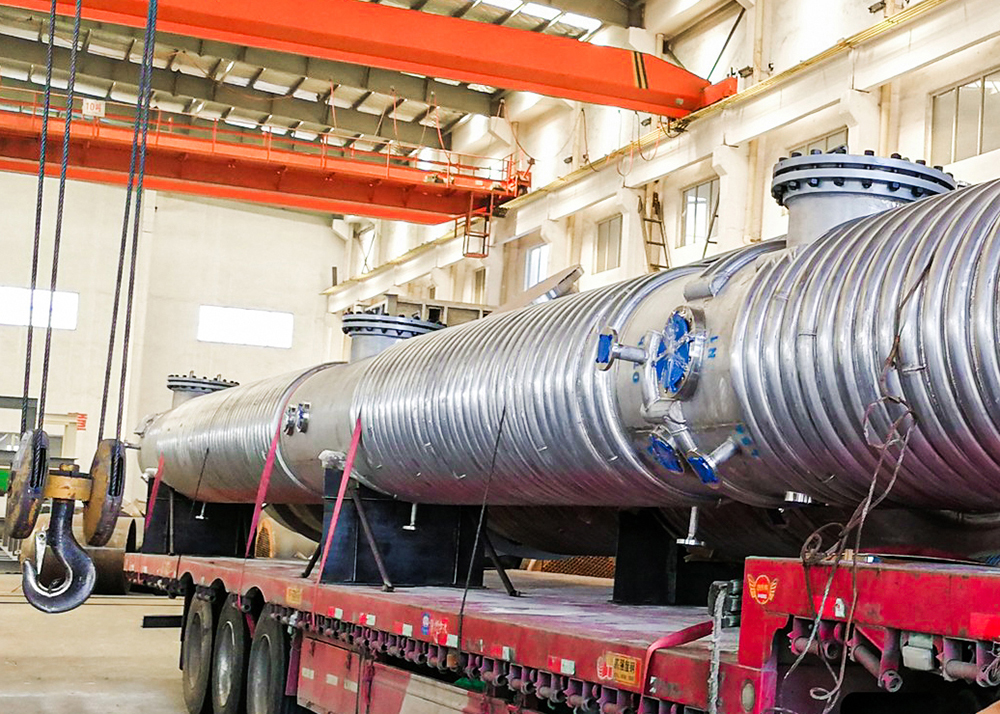
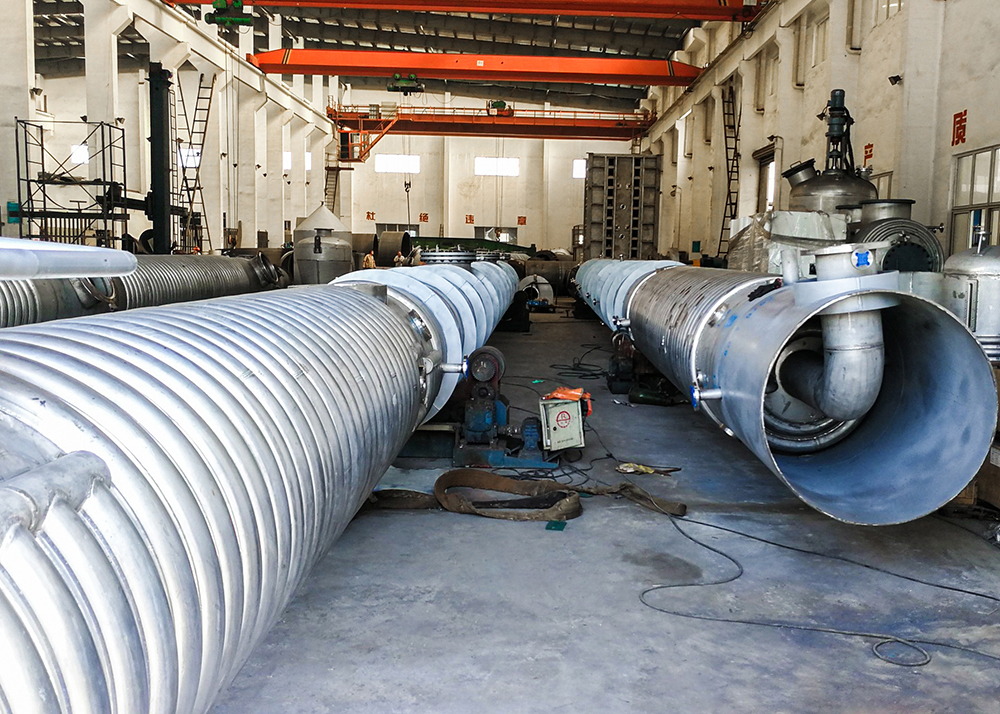
The core advantages of coil type reaction vessels are fast heat transfer rate, high temperature control accuracy, suitable for large volumes, and the ability to quickly raise and lower temperatures. The sanitary version (316L, mirror polished, CIP online cleaning) meets GMP standards and is a commonly used equipment for raw materials, intermediates, formulations, and traditional Chinese medicine e
Learn more -

What factors affect the heat transfer efficiency of tower kettle reboiler
The heat transfer efficiency of the tower kettle reboiler is determined by the total heat transfer coefficient, effective heat transfer temperature difference, and heat transfer area, and is also influenced by six major factors: boiling flow state, medium properties, structural design, operating conditions, fouling and corrosion, and heat source system
Learn more -

What are the manufacturing processes for outer coil stainless steel towers
The main type of outer coil is a semi-circular spiral outer coil, with a few being circular tubes wrapped around coils; The tower body consists of a cylinder, upper and lower heads, connecting pipes, and supports; The coil itself is an independent pressure chamber, which is tested separately from the tower body
Learn more -

What are the applications of stainless steel towers in the chemical industry
Stainless steel towers rely on the excellent corrosion resistance, high-temperature adaptability, structural stability, and cleanliness characteristics of the substrate, and are widely used in mass transfer, separation, reaction, absorption and other process units in chemical systems. They are suitable for acidic, weakly corrosive, clean media, high-temperature materials and other working conditio
Learn more -

Where is the evaporation efficiency of the falling film evaporator reflected
The falling film evaporator relies on the structural characteristics of uniform thin liquid film gravity flow inside the tube, which reflects the evaporation efficiency from multiple dimensions such as heat and mass transfer, energy consumption utilization, material conditions, and operation control. The relevant explanations are as follows:
Learn more -

What are the characteristics of tubular heat exchangers
Tube and shell heat exchangers belong to inter wall heat exchange equipment, which rely on the heat exchange tube wall to achieve heat transfer between the tube side and the shell side fluids; The core features are sturdy structure, strong pressure and temperature resistance, wide adaptability to working conditions, and customizable on a large scale. It is divided into three mainstream structures:
Learn more -

In which industries are horizontal carbon steel storage tanks applied
Horizontal carbon steel storage tanks are mostly atmospheric/low-pressure vessels, which can be arranged on the ground or underground; Bare tanks are suitable for oil products and neutral media, and can be expanded to store weakly corrosive materials after being lined with anti-corrosion layers. They are widely used in the following industries:
Learn more -

What form does the outer coil stainless steel tower support adopt
The stainless steel tower with outer coil tube belongs to a vertical tower with heat exchange jacket load. The selection of supports is determined based on the tower height, height to diameter ratio, total weight, wind and seismic loads, and the space of the outer coil tube insulation layer. It is divided into the following four categories: high and large distillation absorption towers prioritize
Learn more -

What are the main energy consumption distribution links of the deodorization tower
The vast majority of energy consumption in the deodorization section is steam, followed by cooling water/refrigeration power consumption, conveying pump power consumption, and equipment heat dissipation loss
Learn more -

What are the risks associated with the operation of carbon steel spiral plate heat exchangers with i
The medium carrying solid impurities (such as sediment, metal oxide scale, welding slag, crystalline particles, fiber suspension, etc.) into the carbon steel spiral plate heat exchanger channel can bring a series of risks such as wear, blockage, corrosion, structural deformation, and heat transfer failure. According to GB/T 28712 "Spiral Plate Heat Exchanger" and relevant specifications for pressu
Learn more
Welcome to Changshu Longyu Chemical Equipment Co., Ltd.




More than 20 years of focus on R&D and production of chemical equipment
Provide I, II carbon steel and stainless steel pressure vessel solutions

Service Hotline:
0512-52093708
+
Wechat number:18626143580


 Hotline:0512-52093708
 E-mail:yutezjl@163.com
 Address:No. 101, Taojia Bridge, Dahe Village, Shanghu Town, Changshu City, Suzhou City, Jiangsu Province


 Add wechat
 Contact us
 Telephone