What are the manufacturing processes for outer coil stainless steel towers
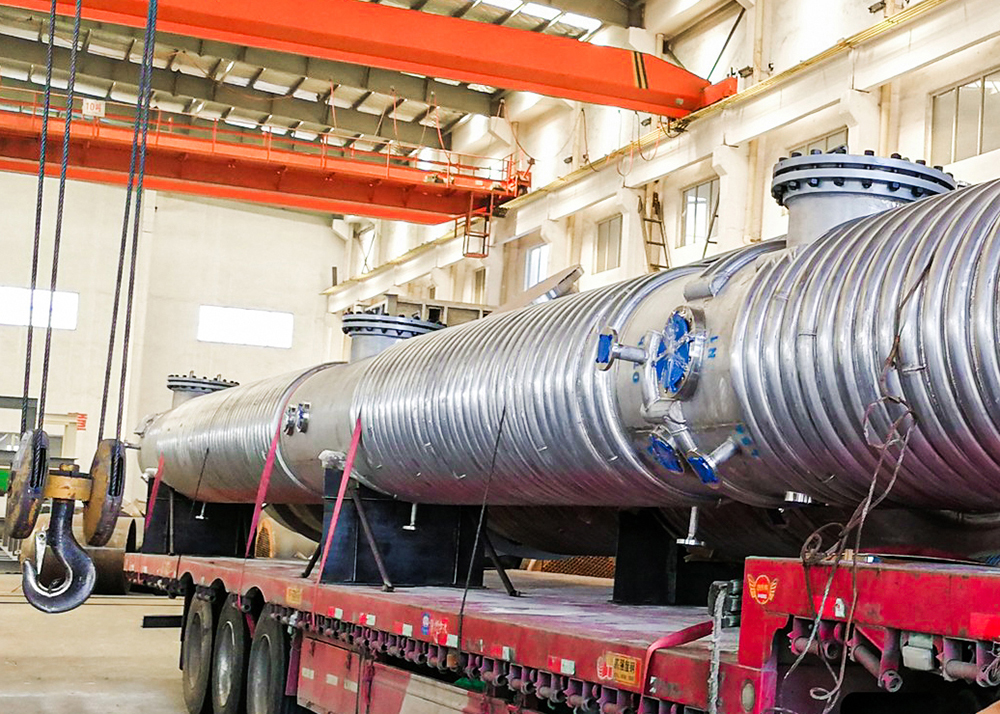
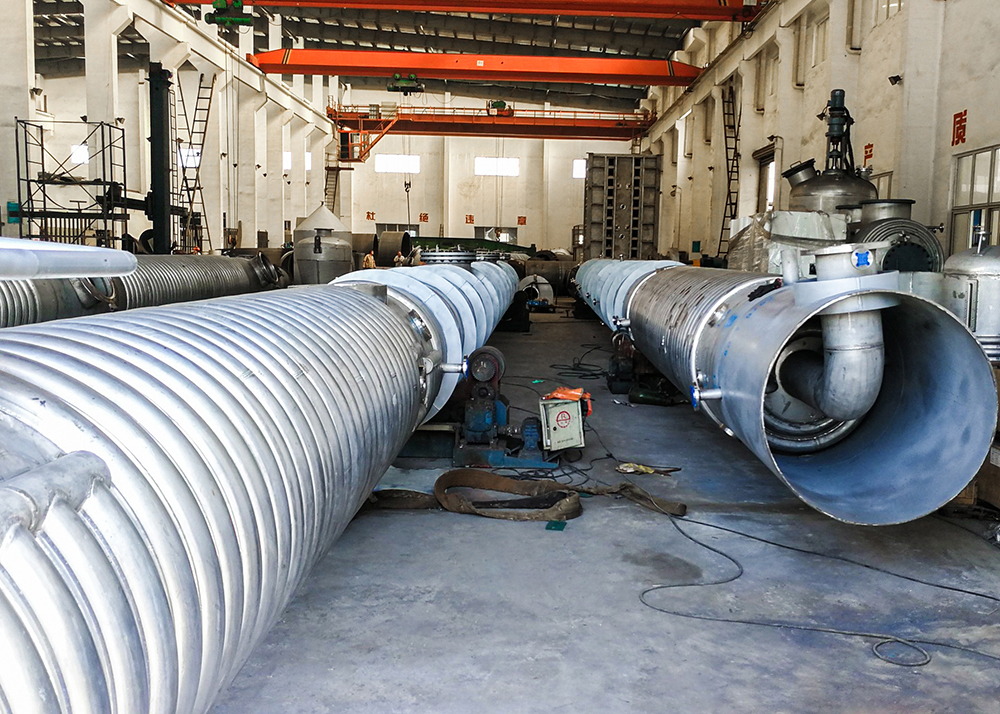
Information summary:The main type of outer coil is a semi-circular spiral outer coil, with a few being circular tubes wrapped around coils; The tower body consists of a cylinder, upper and lower heads, connecting pipes, and supports; The coil itself is an independent pressure chamber, which is tested separately from the tower body
The main type of outer coil is a semi-circular spiral outer coil, with a few being circular tubes wrapped around coils; The tower body consists of a cylinder, upper and lower heads, connecting pipes, and supports; The coil itself is an independent pressure chamber, which is tested separately from the tower body
1. Raw material incoming inspection
Spectral review of materials, quality assurance certificates, thickness, and appearance for plates, seamless pipes/steel strips (304, 316L, duplex steel, etc.)
Welding materials (ER308L, ER316L, etc.) should be matched with the base material and stored against moisture
Surface inspection of plates and pipes, with no cracks, interlayers, or rust; Strictly control the sources of iron ion pollution in stainless steel
2. Tower body cutting and forming
Cylinder cutting: laser/plasma cutting, chamfering; Rolling machine for roundness, controlling ellipticity and edge angle
Head: spin formed; Solution treatment as needed after molding to eliminate cold work hardening
Marking and opening: pipe mouth, manhole, liquid level port, temperature measuring port, support reference line, opening and groove processing
3. Prefabrication of semi-circular outer coil tube (core specialized process)
Two molding routes:
Route A (Steel Strip Rolling Forming, Large Batch): Stainless steel strip uncoiling → Multi roll continuous rolling into semi-circular tube → Fixed length → Butt welding → Grinding weld → Non destructive testing → Spiral bending forming, pre forming according to the drawing pitch
Route B (Circular Tube Splitting/Stamping): Seamless tubes are cut open and pressed into semicircles, suitable for small diameters and small batches
Round tube outer coil tube: Directly use a pipe bending machine to spiral bend seamless tubes without cutting them in half, with a heat transfer area lower than that of semi-circular tubes
Key points for coil prefabrication:
Coil butt weld: argon arc welding as the base, argon arc welding with low line energy, controlling interlayer temperature<150 ℃, preventing intergranular corrosion
After prefabrication, perform non-destructive testing (PT/RT) on a single section coil and clean the oxide skin on the weld seam
4. Assembly and welding of tower body
Cylinder longitudinal seam: automatic argon arc welding/plasma welding; Circular seam: automatic TIG/MIG; Manual argon arc welding for takeover and reinforcement ring
Welding control: groove cleaning and degreasing; High purity argon protection; Stainless steel adopts narrow channel, fast welding, and low heat input to avoid sensitization
Perform non-destructive testing on welds according to the drawing requirements: RT/UT, surface PT/MT; Synchronous welding of product test plates, conducting mechanical and intergranular corrosion tests (316L and other corrosion-resistant conditions)
5. Spiral fitting and welding of outer coil (key process)
1. Polish, remove oil and rust from the outer wall of the cylinder, and mark the spiral reference line and pitch line
2. The pre formed semi-circular tube is spiral wound and attached to the cylinder wall, spot welded for positioning, ensuring a tight and seamless fit (gaps can significantly reduce heat transfer efficiency)
3. Continuous welding of the corner joints on both sides of the semi-circular tube: fuse the two bottom edges of the semi-circular tube with the cylinder body, and perform continuous full welding; Segmented symmetrical welding to reduce welding deformation of the cylinder body
4. Collect the head and tail of the coil, make a collection pipe, inlet and outlet connections, and discharge outlet; The joint welds between coils and the header welds are completed synchronously
It is strictly prohibited to use intermittent spot welding instead of full welding; The tower is wrapped in sections, starting with the lower section, welding, shaping, and then the upper section
6. Non destructive testing after welding (testing of two sets of pressure chambers for the body and coil separately)
Main welds of tower body, head, and connecting pipe: RT/UT
Corner welds, coil butt welds, and header welds connecting the semi-circular tube to the cylinder: PT should be prioritized for penetration, and MT/UT should be added for important working conditions
All weld oxide scales and welding slag shall be polished and cleaned; Acid pickling and passivation (austenitic stainless steel) to form a passivation film and enhance corrosion resistance (necessary for food/pharmaceutical/strong corrosion)
7. Pressure test (separate pressure testing of the body and outer coil, two independent pressure chambers)
Hydrostatic test: Test pressure=1.25 times the design pressure; Stainless steel pressure testing water with chloride ions ≤ 25mg/L; Immediately drain and blow dry after pressure testing to prevent pitting corrosion
Airtightness test: When required by the drawing, maintain pressure at 1.0 times the design pressure and perform leak detection (ammonia test, soap water test, helium test)
Sequence: First, the coil is tested for pressure and qualified, and then the tower body is tested for pressure; It can also be reversed according to the drawing requirements; After passing the pressure test, proceed with the insulation process
8. Shape calibration and accessory assembly
Install supports, platforms, escalators, flanges, gaskets, manholes, instrument connections, and relief devices
Re measurement and correction of cylinder roundness and straightness; Protection of sealing surface of pipe flange
9. Surface treatment, insulation and anti-corrosion
Contact medium side: Polishing (MP mechanical polishing/EP electrolytic polishing, pharmaceutical high-purity working condition Ra ≤ 0.8 μ m or even 0.4 μ m)
Outer side of coil: rust removal → primer; Afterwards, lay insulation layer (rock wool/aluminum silicate/polyurethane)+outer protective plate (color plate/stainless steel sheet)
The outer surface of non-contact media can also be acid washed and passivated
10. Final inspection, data archiving, and factory delivery
Overall appearance and size review, pipe protection and sealing
Complete set of documents: Material certificate, Welding Procedure Qualification PQR/WPS, Non destructive Report, Pressure Test Record, Test Plate Report, As built Drawing, Inspection Certificate (Class I/II pressure vessels require inspection)





 Service Hotline

 Hotline:0512-52093708
 E-mail:yutezjl@163.com
 Address:No. 101, Taojia Bridge, Dahe Village, Shanghu Town, Changshu City, Suzhou City, Jiangsu Province


 Add wechat
 Contact us
 Telephone