Why is the heat transfer efficiency of outer coil stainless steel tower relatively high
Information summary:The heat transfer efficiency of the outer coil stainless steel tower is high, and the core is the structural design of the outer coil, which optimizes the core elements of inter wall heat transfer from four dimensions: heat transfer area, heat transfer medium contact mode, heat transfer path, and fluid flow state. Combined with the material characteristics of stainless steel, the overall heat tran
The heat transfer efficiency of the outer coil stainless steel tower is high, and the core is the structural design of the outer coil, which optimizes the core elements of inter wall heat transfer from four dimensions: heat transfer area, heat transfer medium contact mode, heat transfer path, and fluid flow state. Combined with the material characteristics of stainless steel, the overall heat transfer efficiency is far superior to traditional tower heat transfer structures such as jacket type and inner coil type, while adapting to the process requirements of industries such as chemical and pharmaceutical.
Simply put, the efficiency of wall to wall heat transfer depends on the heat transfer area A, the total heat transfer coefficient K, and the temperature difference Δ t between the cold and hot media (heat transfer basic equation: Q=K ・ A ·Δ t). The outer coil stainless steel tower is optimized around these three core parameters, combined with the process adaptation advantages brought by the structure, to achieve efficient heat transfer. The specific reasons are divided into six main points, and each layer corresponds to the core elements of heat transfer:
1. Large heat transfer area and high proportion of effective heat transfer
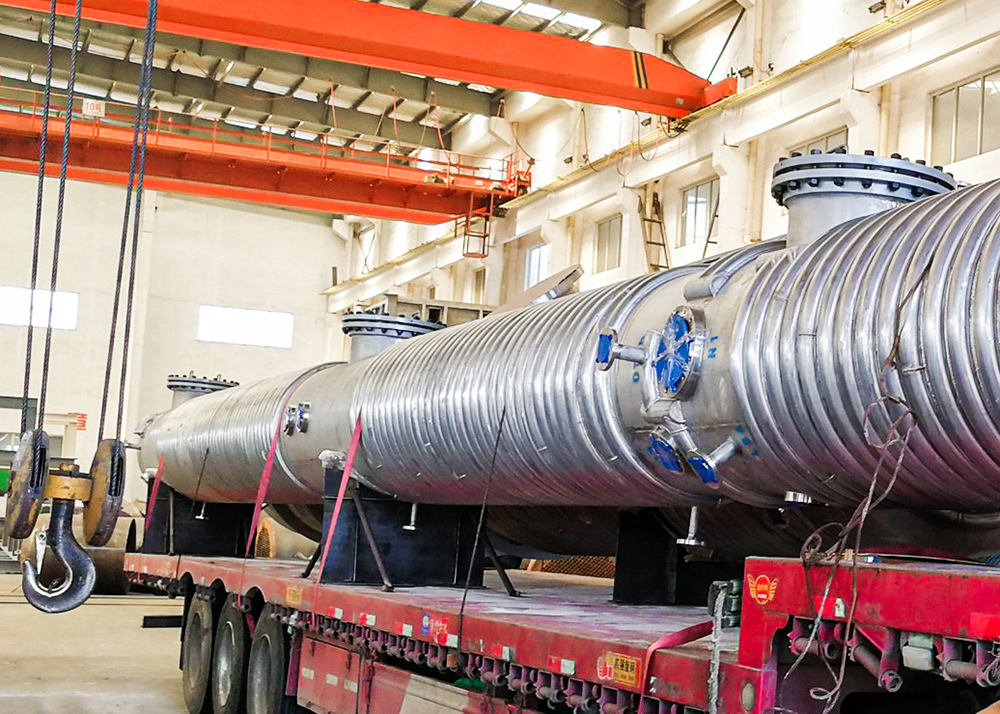
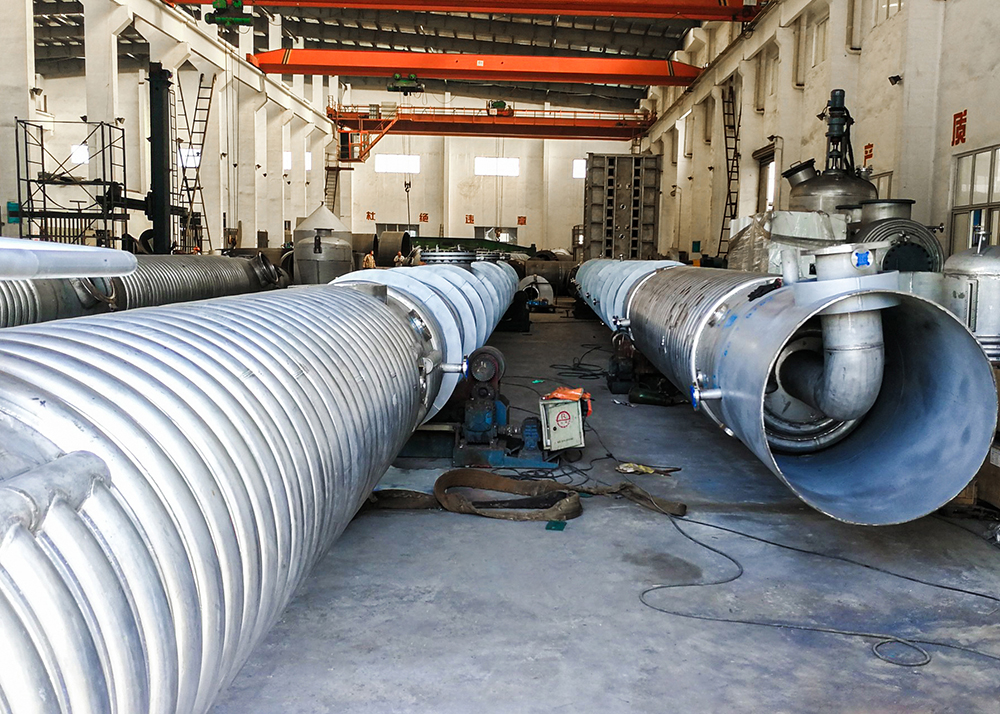
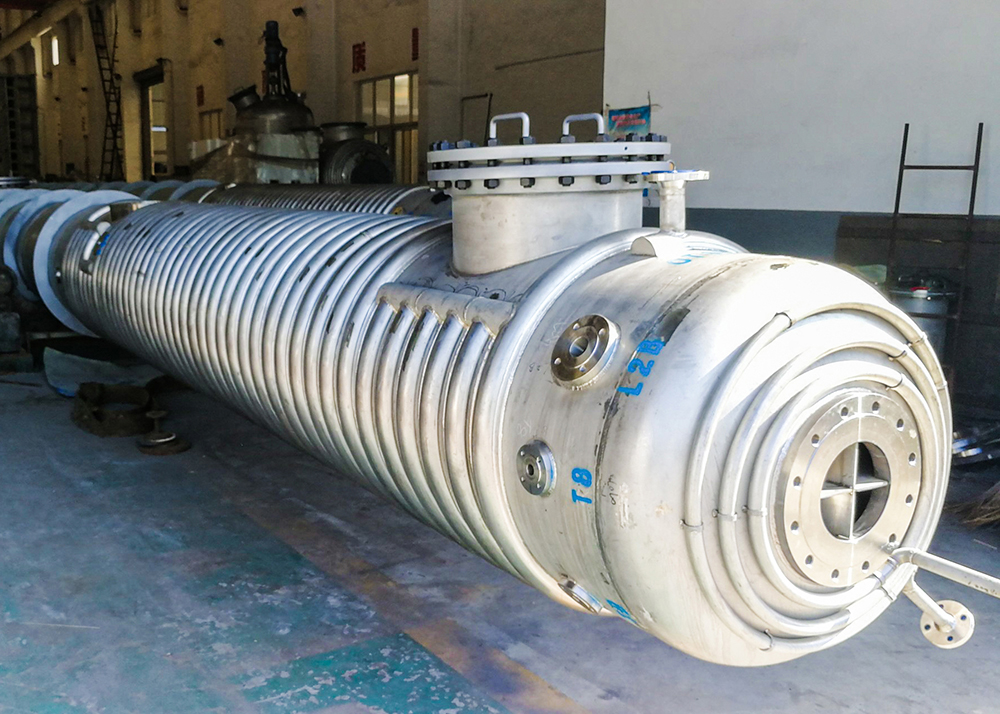
The outer coil adopts multiple spiral/annular coils arranged closely to the outer wall of the tower. Compared with the traditional jacket heat transfer (only one layer of jacket on the outer side of the tower, limited by the diameter of the tower, with a fixed area), the outer coil can flexibly expand the heat transfer area by increasing the number of coils and reducing the spacing between coils. Moreover, the coils are in surface contact with the outer wall of the tower, without the problem of "large gap between the jacket and the tower wall and local voids" in the jacket structure. The effective heat transfer area accounts for more than 95% of the total arrangement area, and the total heat transfer is improved from the basic A value.
However, due to the limitations of process medium flow and equipment installation inside the tower, the number and area of coil arrangement in the inner coil type are much smaller than those in the outer coil type, and they are easily adhered and obstructed by materials inside the tower, further reducing the effective heat exchange area. This is also the core advantage of the outer coil type.
2. The overall heat transfer coefficient K has significantly increased, and there is no bottleneck in heat transfer
The total heat transfer coefficient K reflects the overall heat transfer capacity of the "cold and hot medium → pipe wall → other side medium". The larger the K value, the more heat is transferred per unit area and unit temperature difference. The outer coil greatly increases the K value from the perspective of reducing thermal resistance, which is the core reason for efficient heat transfer:
Reduce the thermal resistance of the partition wall: stainless steel material (mainly 304/316L) is used, with a thermal conductivity λ of about 16-21W/(m · K), which is much better than carbon steel lining, fiberglass and other materials. The tower body and coil are both made of stainless steel, with the same material and no sudden change in thermal resistance due to heterogeneous contact at the joint. The solid thermal resistance of heat transfer from the heat exchange medium inside the coil to the tower wall is extremely small;
Reduce convective heat transfer resistance: The heat transfer medium (cold water, hot water, steam, heat transfer oil) inside the coil is forced turbulent flow (the spiral structure of the coil will cause the fluid to swirl), and the convective heat transfer coefficient α in turbulent state is much greater than laminar flow, greatly reducing the convective heat transfer resistance of "heat transfer medium → coil wall"; At the same time, the process medium inside the tower is natural convection/forced circulation flow. After heat exchange by the coil, the tower wall forms a temperature gradient between the wall and the material, which drives the material inside the tower to form local circulation and also improves the convective heat transfer coefficient from the tower wall to the process medium;
No additional thermal resistance: The outer coil is arranged on the outside of the tower, away from the process medium inside the tower, and will not be adhered by the materials, scaling, or crystallization inside the tower. The cleanliness of the tube wall is high, and there is no problem of "scaling and material adhesion causing a sharp increase in thermal resistance" in the inner coil type. After long-term use, the K value can still remain stable, while the jacket type is prone to scaling and liquid accumulation inside the jacket, and the thermal resistance will rapidly increase over time.
3. The temperature difference Δ t between the cold and hot media is more stable, and the effective average temperature difference is large
The temperature difference Δ t for heat transfer is the actual heat transfer temperature difference between the cold and hot media. The outer coil structure allows the flow direction of the cold and hot media to be flexibly designed as counterflow heat transfer (the tower body flows from top to bottom as the process medium flow direction, and the heat transfer medium inside the coil flows from bottom to top). The average temperature difference Δ t for counterflow heat transfer is much greater than that for parallel flow, which can utilize the temperature potential energy of the cold and hot media to avoid the problem of "end temperature difference approaching zero and heat transfer efficiency plummeting" in parallel flow.
At the same time, the outer coil is independently fed in sections/coils, and the heat exchange medium temperature and flow rate of the corresponding coil can be adjusted according to the process temperature requirements of different heights of the tower body, so as to maintain the Δ t of each section of the tower body within a good range and avoid the heat exchange "dead zone" caused by small local temperature differences. However, the jacket type is unable to adapt to the process temperature difference requirements of different heights of the tower body due to the uniform temperature of the heat exchange medium caused by the entire tower jacket being a chamber, resulting in low local heat exchange efficiency.
4. Optimization of fluid flow state to enhance convective heat transfer
The spiral/annular structure of the outer coil will cause the heat transfer medium inside the coil to generate swirling and secondary flow, breaking the laminar boundary layer of the fluid (which is the main resistance to convective heat transfer), making the contact between the heat transfer medium and the coil wall more complete, and greatly improving the convective heat transfer coefficient; At the same time, the coil is tightly attached to the outer wall of the tower, and there is no "dead zone" for the flow of heat transfer medium. There is no accumulation of liquid or gas inside the coil, and the fluid flow velocity is uniform, avoiding the problem of "liquid accumulation at the bottom and gas accumulation at the top of the jacket, local fluid stagnation, and heat transfer failure" in the jacket structure.
The process medium inside the tower, due to the uniform heat exchange of various parts of the tower wall by the coils, forms radial and axial temperature gradients, carrying animal materials to generate natural circulation, making the temperature of the materials inside the tower more uniform and avoiding local material overheating/undercooling, indirectly improving the overall heat transfer efficiency.
5. The distribution of heat transfer medium is uniform, the temperature on the tower wall is uniform, and there are no local heat transfer short plates
The outer coil adopts a continuous spiral arrangement of a single coil or a parallel circular arrangement of multiple coils. The flow velocity and flow rate of the heat transfer medium in each coil are uniform, which can ensure that every part of the outer wall of the tower is uniformly heat exchanged. The temperature deviation of the tower wall can be controlled within ± 2 ℃, avoiding the problem of "strong heat transfer near the inlet and outlet of the jacket, weak heat transfer far away from the inlet and outlet, and uneven tower wall temperature" in the jacket structure.
Uniformity of tower wall temperature not only improves overall heat transfer efficiency, but also avoids thermal stress deformation caused by excessive local temperature differences on the tower wall. At the same time, it makes the reaction/separation of process media inside the tower more stable (such as distillation and crystallization processes that require high temperature uniformity). This is also an important reason why the chemical and pharmaceutical industries prioritize the use of external coil towers.
6. The adaptability of stainless steel material further ensures the continuity of efficient heat transfer
The tower body and coils of the outer coil stainless steel tower are made of food grade/industrial grade stainless steel (304/316L), which has the characteristics of corrosion resistance, resistance to scaling, and smooth surface:
Corrosion resistance: Suitable for corrosive process media (such as acid and alkali, organic solvents) and heat exchange media (such as heat transfer oil, steam condensate) in the chemical and pharmaceutical industries, avoiding wall corrosion perforation and scaling, and ensuring the long-term integrity of heat exchange structures;
Not easy to scale: The passivation film on the surface of stainless steel makes it difficult for scale and material crystallization to adhere, and the pipe wall remains smooth for a long time without the increase in thermal resistance caused by scaling. Compared with carbon steel jackets (which are prone to rust and scaling and need to be cleaned regularly), the heat transfer efficiency of the outer coil stainless steel tower decays very slowly, and can maintain an initial heat transfer efficiency of over 80% during its service life;
Easy to clean: The outer coil is arranged on the outside of the tower, and there is no need to open the tower during cleaning. Only high-pressure water flushing and chemical cleaning of the outer wall of the coil are required. The operation is simple and can quickly restore heat transfer efficiency. However, the cleaning of the inner coil and jacket is difficult and can easily damage the process components/jacket seals inside the tower.








 Service Hotline

 Hotline:0512-52093708
 E-mail:yutezjl@163.com
 Address:No. 101, Taojia Bridge, Dahe Village, Shanghu Town, Changshu City, Suzhou City, Jiangsu Province


 Add wechat
 Contact us
 Telephone